If you're new to roller banner printing or want to streamline your production process, this guide will walk you through how to print roller banners from start to finish.

From choosing the right materials and preparing your artwork to installing your banner in a cassette, we'll cover everything you need to create professional, display-ready results.
Whether you're producing one banner for a small business or a full run for a large event, getting the process right can save you time, money and unnecessary reprints.
Watch Our Roller Banner Printing Tutorial
We've put together a practical, step-by-step video showing you how to make a pull up banner, including handy tips for media handling, trimming and loading graphics into cassettes.
What Do You Need to Print a Roller Banner?
Before getting started, make sure you have the right equipment and materials.
You'll typically need:
- A compatible wide-format printer
- Suitable pull up banner printing material
- Print-ready artwork
- A rotary trimmer or cutting rail
- A roller banner cassette and support pole
- Strong double-sided banner tape, where required
Having everything prepared beforehand will help make production and assembly more straightforward.
Step 1: Choose the Right Roller Banner Material
Your banner's quality starts with your choice of media.
At Signmaster, we recommend the SM1 Premium Pull-Up Banner Material, trusted by print professionals for its:
- Lay-flat stability: Helps prevent curling and keeps graphics looking neat.
- Grey blockout backing: Reduces light show-through for better presentation.
- Scratch-resistant satin finish: Helps maintain a professional appearance during handling.
- Printer compatibility: Suitable for compatible solvent, eco-solvent and UV printing equipment.
When selecting roller banner material, consider how frequently the display will be used, the finish required and your printer's ink technology.
Choosing suitable media helps ensure your graphics look sharp, stand tall and remain presentable across multiple events.
Step 2: Prepare Your Roller Banner Artwork
Correct artwork preparation is essential when learning how to print roller banners.
Before printing, check the following:
- Dimensions: Common finished graphic widths include 850mm and 1000mm, with display heights often around 2000mm. Always confirm the dimensions of your chosen cassette.
- Bottom allowance: Include additional material for cassette loading. The required allowance varies by manufacturer and cassette model.
- Colour settings: Prepare artwork using an appropriate CMYK workflow and the recommended colour profile.
- Safe areas: Keep logos, text and important content away from trimming edges and areas concealed inside the cassette.
- Resolution: Use sufficiently high-resolution artwork for the intended viewing distance.
Export your design as a print-ready PDF using the specifications required by your printer and RIP software.
Step 3: Set Up Your Wide-Format Printer
Once your artwork is ready, prepare your printer for production.
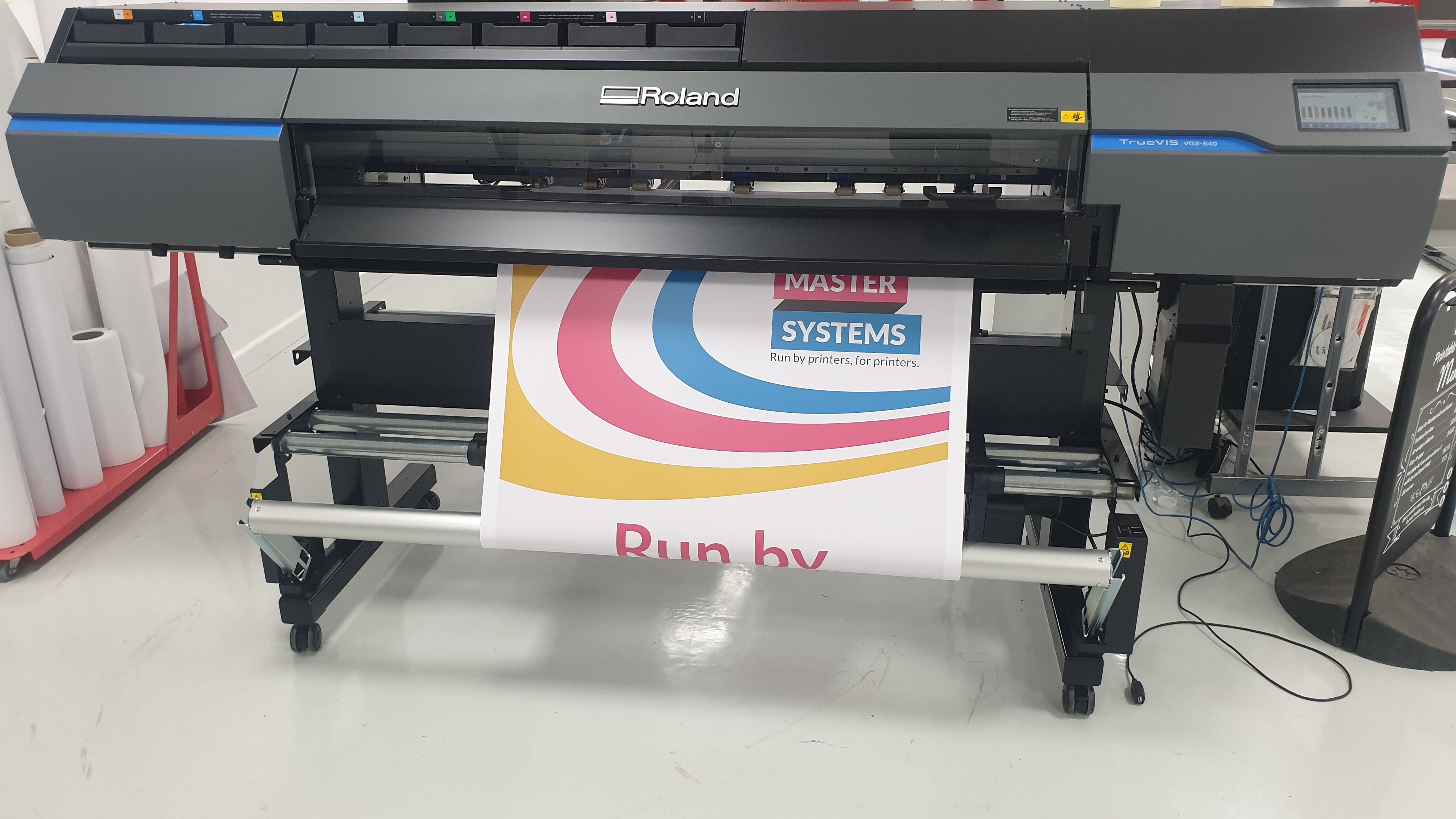
Load the SM1 roller banner material carefully, ensuring it's aligned correctly and feeds smoothly through the machine.
Select the appropriate ICC profile and print settings for your chosen media and ink type.
For high-quality graphics, a higher-pass print mode may help produce smoother colours and more consistent coverage, although the ideal settings depend on your equipment.
It's worth checking media compatibility and performing a test print before starting a larger production run.
Step 4: Print and Check Your Roller Banner
With your printer configured, you can begin printing your banner.
Monitor the first section of the print to check for colour consistency, banding or media feeding issues.
Once printing is complete, allow the ink to dry or cure according to the requirements of your printer and ink technology.
Before trimming, inspect the finished graphic for:
- Colour accuracy and consistent coverage
- Sharp text and clear images
- Scratches or visible print defects
- Correct dimensions and alignment
Taking a few minutes to check the results can help prevent wasted materials during finishing.
Step 5: Trim and Finish Your Printed Banner
Using a rotary trimmer or straight edge, carefully trim your banner to the required width and length.
Remember to retain the necessary bottom allowance for cassette loading.
For precise cutting, we recommend the Trimalco Athena 3 Cutting Rail.
Featuring dual cutting tracks, one for the blade and another for the cutting wheel, the Athena 3 is designed for precision and versatility.
Accurate trimming is particularly important when producing multiple banners, as uneven edges can affect alignment and cassette operation.
Step 6: Install the Banner Into a Roller Banner Cassette
Now it's time to bring everything together.
Choose the cassette that suits your client's requirements:
- SM1 Everyday Cassette – A cost-effective, lightweight option.
- SM1 Enhanced Cassette – A more substantial design with a premium feel.
- Origin Eco Cassette – A plastic-free alternative for environmentally conscious projects.
How to Load Your Printed Graphic
- Secure the cassette and carefully pull out the graphic leader according to the manufacturer's instructions.
- Attach the bottom of your banner using suitable double-sided banner tape or the specified fixing method.
- Check that the graphic is centred and correctly aligned.
- Allow the graphic to retract slowly and evenly into the cassette, following the mechanism's instructions.
- Attach the top of the graphic to the rail or clip bar.
- Insert the support pole and extend the banner to check its alignment and tension.
Avoid releasing the spring-loaded mechanism unexpectedly during assembly.
That's it – you've created a professional-quality pull up banner!
Common Roller Banner Printing Problems and How to Avoid Them
Even when you know how to print roller banners, a few common issues can affect the finished result.
- Curling edges: Choose quality lay-flat media and check printer heating settings.
- Banding or inconsistent colours: Check printhead condition, media profiles and print settings.
- Incorrect sizing: Confirm cassette dimensions and fitting allowances before printing.
- Uneven retraction: Make sure the graphic is trimmed squarely and attached centrally.
- Scratches or surface damage: Allow sufficient drying or curing time and handle printed media carefully.
A final inspection before delivery can help ensure your banners are ready for professional use.
Tested and Approved by the Signmaster Team
We don't just sell materials – we use them.
Our SM1 material has undergone extensive testing by our technical team across multiple machines and ink types. We've also trialled it in real-world display conditions to assess its performance.
This practical experience helps us recommend materials and equipment suited to professional roller banner production.
Find Roller Banner Materials and Accessories at Signmaster
Understanding how to print roller banners is the first step towards producing reliable, professional displays for your customers.
From premium banner media and cutting equipment to durable cassettes, Signmaster offers the products you need to complete your projects.
Get in touch with our team for advice on selecting the right products for your printing requirements.